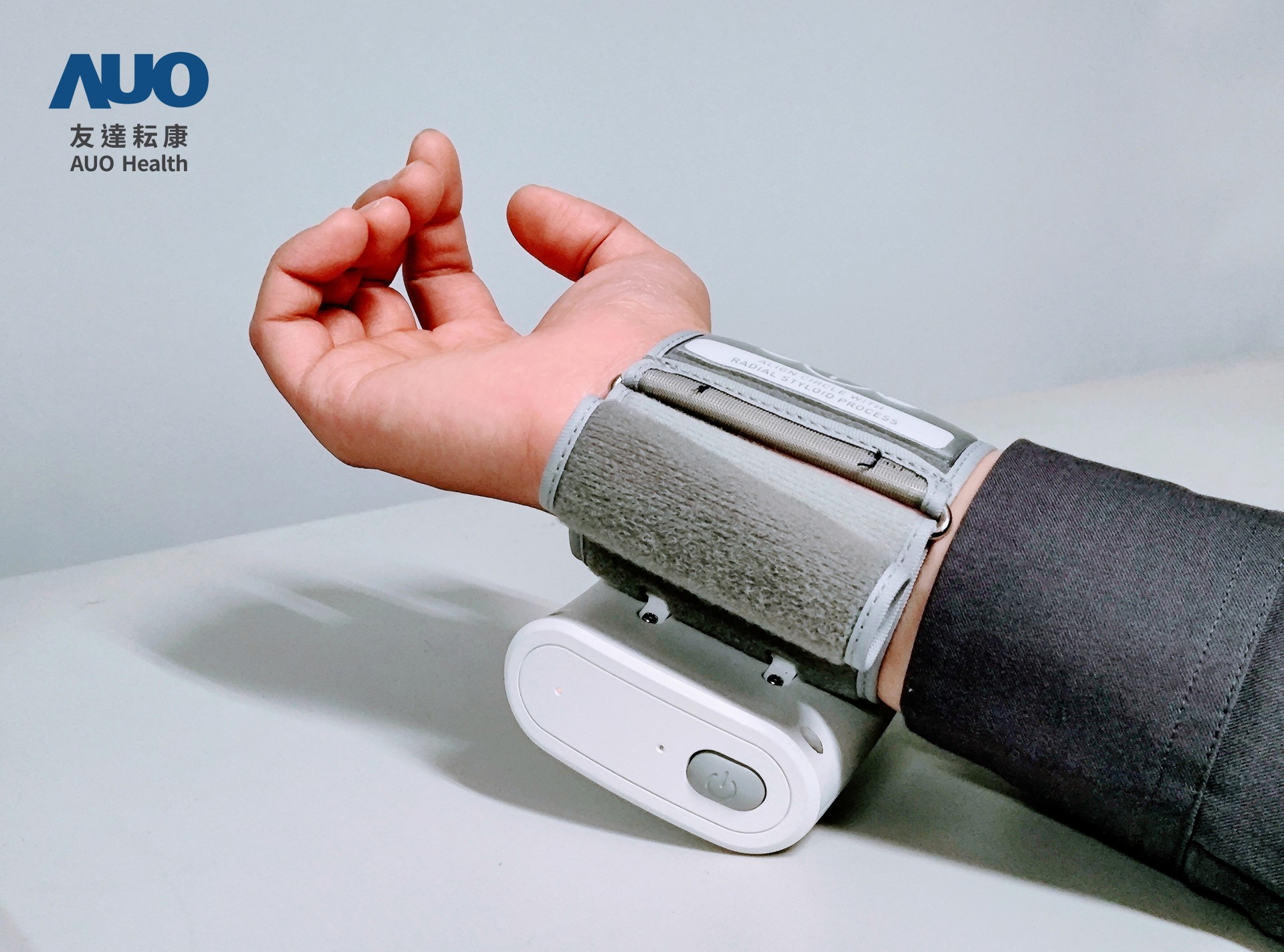
Driving product strategy of health management solution with pulse data
OBJECTIVES
Assess user attitudes, behaviors, and barriers related to pulse data in daily health contexts.
Support product strategies by validating the following hypotheses:
H1: People have a need for pulse data in personal health management.
H2: Access to meaning of pulse data increases willingness to use it for health purposes.
H3: Mid-senior age groups are more inclined to use pulse data for health management.
IMPACTS
Identified key user needs and generated actionable insights
I identified 3 key adoption factors and delivered 5 actionable recommendations by conducting user interviews, surveys, and data analysis to prioritize features and align designs with user needs.
RESEARCH QUESTIONS
Timeline
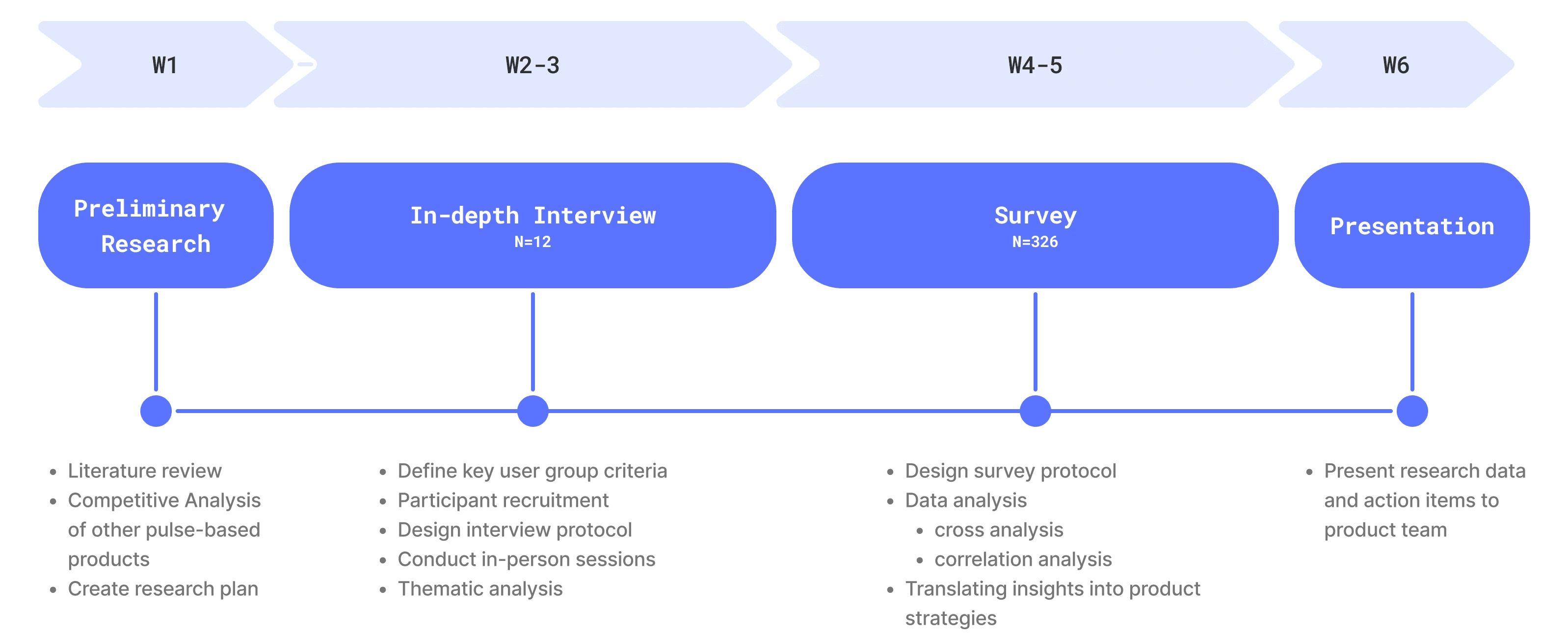
A 6-week timeline illustrating the detailed process and methodologies employed during each phase of the research.
METHODS
In-depth Interview
Goal
Understand users’ thoughts and attitudes toward daily health management and the intention of using pulse data
Identify potential opportunities and challenges of adopting pulse-data-based health solutions
Approach
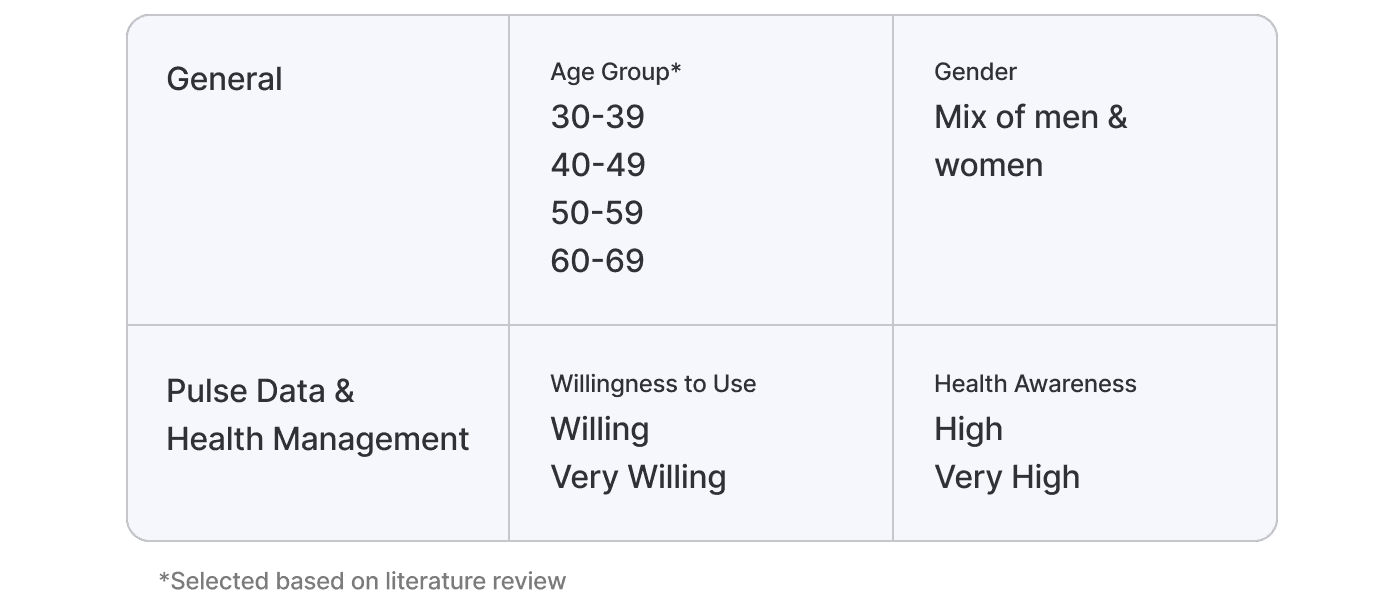
I conducted a total of 12 in-person interviews (3 participants from 4 different age group). I probed for their general attitudes, behaviors and preferences on pulse data, and narrowed down to their most recent experience utilizing pulse data.
Key Insights
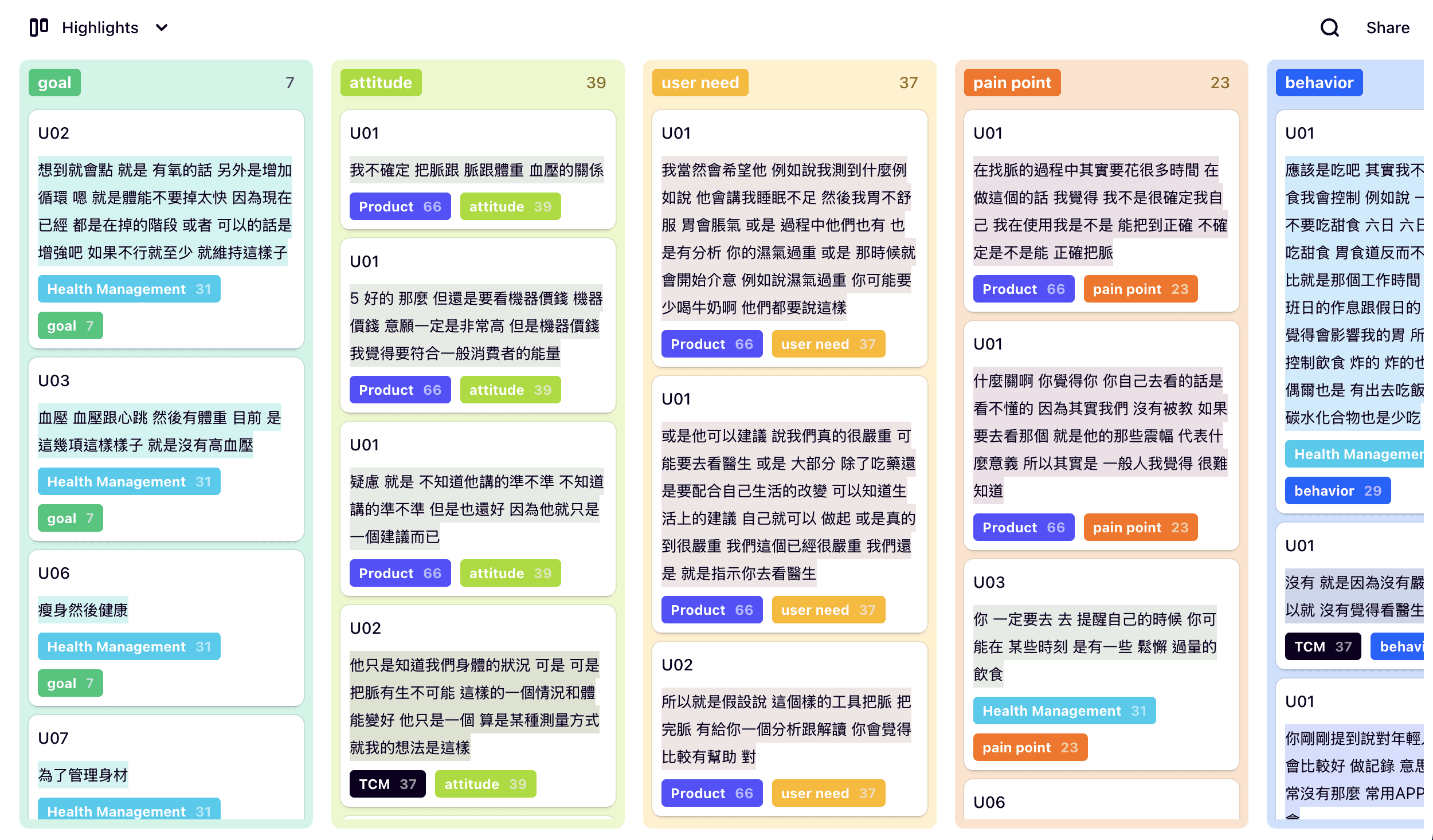
I organized interview highlights in Dovetail, categorizing insights with tags for efficient analysis and synthesis.
Opportunities
Users desire personalized diet recommendations based on pulse data.
Benchmarking against health metrics and tracking progress are valued features.
Challenges
The concept of pulse data is often confusing, raising doubts about its value.
Complicated measurement processes may discourage regular use.
Survey
Goal
Quantify insights from interviews and assess potential for adoption of applying pulse data on health management.
Focus
The survey assessed four dimensions: Comprehension, Belief, Attitude, and Intention, each measured on a 5-point Likert scale to gauge users' perceptions and willingness.
FINDINGS
Personalized health solutions drive user engagement with pulse data products
The regression model (Pseudo R-squared = 0.385) identified factors that significantly affect the intention to use, validating the hypotheses.
H1: Belief in Health Benefits Drives Adoption
A strong belief in the health benefits of pulse data (Q11, p < 0.001) significantly influenced users’ intention to adopt pulse-based health solutions, with over 60% of respondents viewing pulse data as beneficial.
H2: Health Relevance Over Data Comprehension
Users’ understanding of how pulse data relates to health (Q2, p = 0.040) was more impactful than comprehension of pulse data alone (Q1, p = 0.055). This suggests a need to emphasize health relevance in product messaging.
H3: Age Group Shows No Significant Effect
The chi-squared test showed no significant association between age group and adoption intentions, suggesting that age is not a key factor in pulse data utilization.
NEXT STEPS
Suggestions for project action items
Product Strategy
Building on the research findings and insights, I presented actionable product strategies to the entire product team, emphasizing alignment with the product goals, feature development, and users' content preferences.Details are NDA-protected
Research Strategy
Recognizing potential limitations in the research due to time and tool constraints, I proposed a follow-up research plan to offer a more comprehensive understanding of user needs:Investigate users who express a neutral interest in adopting pulse-data-driven solutions to better understand their motivations and barriers.
Conduct an in-depth analysis of the identified user groups to outline their detailed demographics and uncover potential correlations that can further inform product design and targeting strategies.
REFLECTIONS
Limitations & lessons learned
Leverage stakeholder insights to shape research goals
Without prior product research, I proactively initiated discussions with the product manager and attended biweekly product meetings with the CEO. These efforts allowed me to gain a comprehensive understanding of the product blueprint and the team's current struggles, ultimately helping me define a clearer and more focused research goal.
Enhance plan clarity through goal-setting
I learned the critical importance of defining research goals during early project stages, especially when facing vague and exploratory problem statements. Establishing clear objectives empowered me to develop a focused research plan, select appropriate methodologies, and identify both relevant questions and suitable target participants.